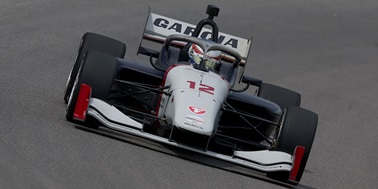
When the inaugural Java House Grand Prix of Arlington roared into North Texas this past March, fans saw world-class racing through the heart of Arlington's Entertainment District. What they didn't see were the countless business decisions, strategic plans and operational challenges required to bring a first-year event of that scale to life.
Now, as preparations begin for year two, the Java House Grand Prix of Arlington is turning to an unexpected group of collaborators: graduate students at the University of North Texas.
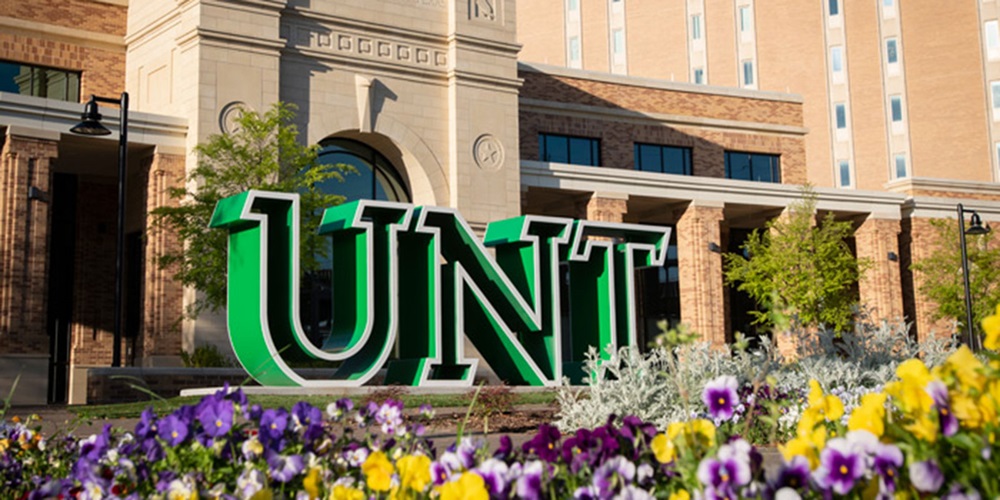
Through a partnership with Dr. Matthew Walker's Sport Entertainment Management class, part of the MBA program at UNT, students are working alongside the Grand Prix organization to tackle real-world business challenges, applying classroom concepts to one of the newest events on the NTT INDYCAR SERIES calendar.
Dr. Walker is the Director of Sport Entertainment Management at UNT and a Professor in the Department of Management in the G. Brint Ryan College of Business, where he teaches courses in corporate partnerships and professional consulting. His research and consulting work spans more than 100 funded projects for sport and related organizations around the world, including the PGA of America, the NFL, Nike, Barclays Bank, USA Archery, and Fulham Football Club Foundation, among others. He's co-authored a scholarly textbook and contributed to more than 100 peer-reviewed articles, with a research focus on strategic organizational management and using marketing and management solutions to strengthen social and strategic programming.
Dr. Walker's course operates like a working agency. Rather than working through hypothetical case studies, student teams take on live business problems and present solutions at the end of the semester. One group, including new GPA intern Nick Gentile, made an early impression: instead of jumping straight to solutions, they opened with a simple but sharp question: "What do you actually need?"
“I was really excited when the GPA team came to visit because it allowed the class to hear directly from the people who made the inaugural event come to life,” said Gentile. “It’s one thing to learn these concepts in the classroom, but getting to apply them to real organizations, such as the Java House Grand Prix of Arlington, challenges us to think critically, analyze real information, and make evidence-based recommendations”
That instinct, Dr. Walker says, is exactly what drew UNT to the Java House Grand Prix of Arlington in the first place.
"What drew us in was the sheer scope and dynamic nature of the Grand Prix," Dr. Walker explains. “As an MBA program built entirely around project and problem-based learning, UNT looks for partners offering complex, real-world environments, not textbook scenarios. It presents the exact kind of multifaceted environment where our student consulting teams can dive in, diagnose real operational challenges, and deliver actionable solutions."
For UNT's Sport Entertainment Management program specifically, the alignment was clear. The Java House Grand Prix of Arlington sits squarely where sports entertainment and community come together; the same way UNT’s curriculum is designed to prepare students.
"We saw an organization that operates at the intersection of sports entertainment and community experience, which aligns perfectly with our MBA curriculum at UNT," Dr. Walker says. "The Grand Prix provides our students with access to real industry decision makers, giving them the rare opportunity to tackle multi-dimensional problems, from operations and marketing to guest experience design, alongside partners who are actively building a world-class event."
Asked to sum up why partnerships like this matter, Dr. Walker didn't hesitate:
"Partnerships like this bridge the gap between a business degree and the industry by turning classrooms into innovation hubs, equipping students with proven execution experience while delivering strategic value to partner organizations."
For the Java House Grand Prix of Arlington, the arrangement offers something rare: fresh eyes and rigorous thinking applied to the real challenges of running a growing street circuit event, paired with the chance to help shape the next generation of sports business leaders. As the event builds toward its second year in Arlington, that kind of thinking, sharp, curious and unafraid to ask the obvious question first, is exactly the fuel it needs to keep accelerating.