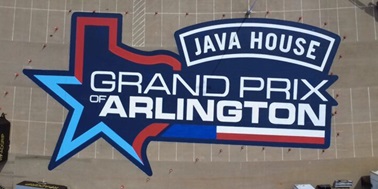
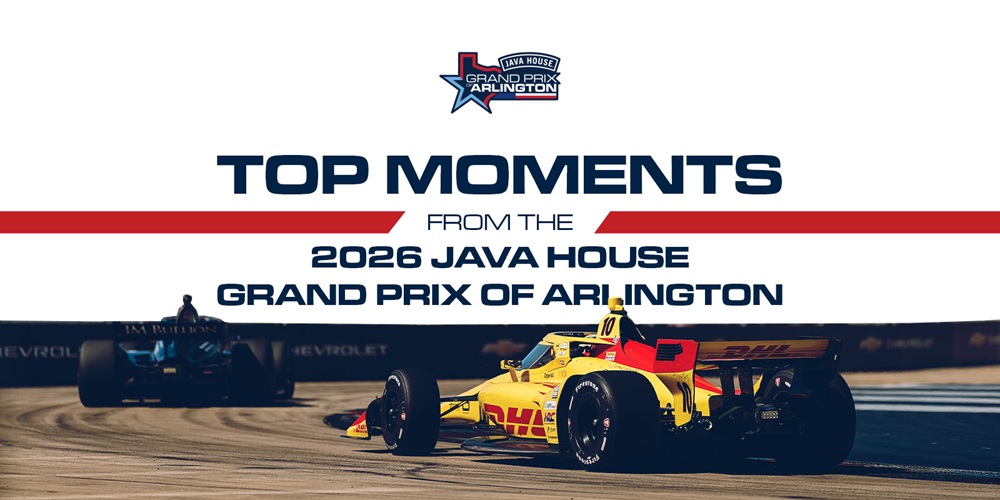
The 2026 Java House Grand Prix of Arlington marked a defining moment for the city and for INDYCAR, an event where partnership, innovation and community pride converged on a global stage.
The weekend delivered a circuit experience that was as technically demanding as it was visually unforgettable.
More than a race, Arlington became a destination. In doing so, it positioned the city not only as a capable host but as a rising presence on the international racing calendar.
Here are the moments that defined its debut.
1. First-of-Its-Kind Partnership Across Major Sports
What set Arlington apart was the unprecedented collaboration between the Dallas Cowboys, Texas Rangers and INDYCAR SERIES, a cross-league partnership rarely seen in professional sports and a first for INDYCAR.
By uniting two of the most recognizable franchises in the NFL and MLB with a premier global motorsports series, the event created a platform that extended far beyond traditional racing audiences.
This convergence brought together diverse fan bases in a shared environment, introducing new audiences to INDYCAR while offering longtime guests an enhanced destination-style experience. The collaboration amplified the scale and visibility of the Grand Prix while demonstrating the power of strategic partnerships to drive fan engagement and expand reach. Arlington set a new precedent, one where sports, entertainment and community intersect to create lasting impact beyond race weekend.
2. A street circuit that stole the show
Before engines roared to life, the Arlington street circuit had already captured international attention. The 2.7-mile temporary course weaved through the city’s entertainment district, offering a visually striking and technically demanding layout.
With multiple overtaking zones and tight corners, the circuit challenged drivers while providing spectators with strong vantage points. Its successful debut positioned Arlington as a compelling new destination on the INDYCAR calendar.
Through visual elements that guests could instantly recognize, the course design paid tribute to the district’s two powerhouses, the Dallas Cowboys and Texas Rangers. The Cowboys’ navy, silver and white color scheme, along with the Lone Star motif, appeared in trackside accents and branding. The Rangers’ red, white and blue palette and “T” logo added a distinctly Texas identity.
Those elements were amplified by the circuit’s proximity to AT&T Stadium and Globe Life Field, which served as visual anchors throughout the race. Together, the design blended the Cowboys’ larger-than-life presence with the Rangers’ heritage-driven identity to create a racing environment that felt distinctly Arlington.
3. The speed trap: Arlington’s underrated spectacle
One of the most compelling features of race weekend was the speed trap at Stadium Drive and Randol Mill Road, a stretch that transformed a familiar city roadway into one of the fastest sections of the circuit. In race conditions, drivers reached speeds approaching 195 mph, making the Java House Grand Prix of Arlington the fastest street course circuit on the INDYCAR schedule.
What made the section especially unique was its contrast: a routine urban road reimagined as a high-performance straightaway where precision, courage and aerodynamic efficiency were on full display. It underscored how dramatically the city was reshaped for race weekend and how seamlessly it performed in that role.
For guests, the speed trap became one of the most underrated viewing spots. Long sightlines offered a dual perspective, cars exiting a technical turn and accelerating at full throttle. It captured both the technical demands of the circuit and the raw speed of INDYCAR machinery.
In a weekend filled with headline moments, the Randol Mill Road speed trap stood as a subtle reminder of what makes street racing compelling, turning the familiar into something extraordinary.
4. The Horseshoe becomes a signature moment
Another standout feature was the “Horseshoe,” a section that quickly emerged as one of the defining elements of race weekend. Rare in modern street circuits, the
Horseshoe combined high-speed acceleration with a tight, technical sequence, forcing drivers to balance aggression with precision.
Drivers approached at speed before braking hard into the complex, creating one of the most dramatic transitions on the track. The section became a focal point for guests, who gathered to watch the speed, sound and split-second decision-making required to navigate it.
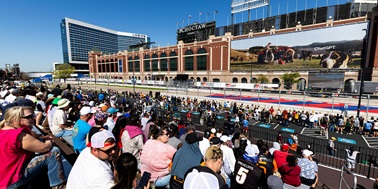
The Horseshoe Club elevated the experience further. Positioned above the track, it offered a unique vantage point as cars raced beneath. The area also served as an entertainment hub, with the concert stage located within the Horseshoe footprint.
More broadly, the Grand Prix delivered three distinct viewing experiences designed to appeal to a wide range of guests: traditional grandstand seating for dedicated race viewing, the elevated Horseshoe Club for a premium, immersive experience, and general admission viewing platforms that provided accessible, dynamic sightlines throughout the circuit. Together, these options ensured there was truly something for all guests.
The combination of racing, hospitality and live entertainment made the Horseshoe more than a section of track. It became the heartbeat of the fan experience.
5. Kyle Kirkwood’s decisive move for the win
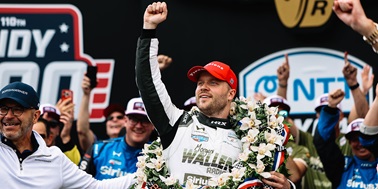
Race day delivered a defining moment when Kyle Kirkwood executed a decisive overtake to win the inaugural event.
Competing on a circuit he had never raced before, Kirkwood showed poise and adaptability as conditions evolved. He positioned himself late, made the move and secured the top step of the podium.
“It was all about learning fast and staying patient. Once we got into a rhythm, I knew we had a shot,” Kirkwood said.
The victory etched his name into Arlington motorsports history and reinforced his emergence as a championship contender. It also cemented the race as one defined by adaptability, strategy and execution.
6. Arlington’s arrival on the global stage
The Java House Grand Prix of Arlington represented a milestone that extended beyond motorsports.
The event blended sport, entertainment and community engagement while elevating Arlington’s international profile. An estimated 75,000 to 80,000 attendees filled the Entertainment District, with guests traveling from all 50 states and more than 20countries. Grandstands reached full capacity on race weekend, marking a sellout for the inaugural race.
The momentum comes as Arlington prepares to host matches during the FIFA World Cup 2026, increasing the importance of delivering world-class experiences.
The successful execution of the Java House Grand Prix of Arlington highlighted collaboration among civic leaders, sports franchises and corporate partners. It reinforced Arlington’s reputation as a premier destination for major events and signaled it is ready for the global stage.
Final Lap: A Landmark Debut
As attention shifts toward what comes next, the momentum generated from the inaugural year sets a clear expectation. Arlington is not just part of the INDYCAR schedule; it is becoming a defining chapter in it, with the next edition poised to build on a debut that proved unforgettable.